

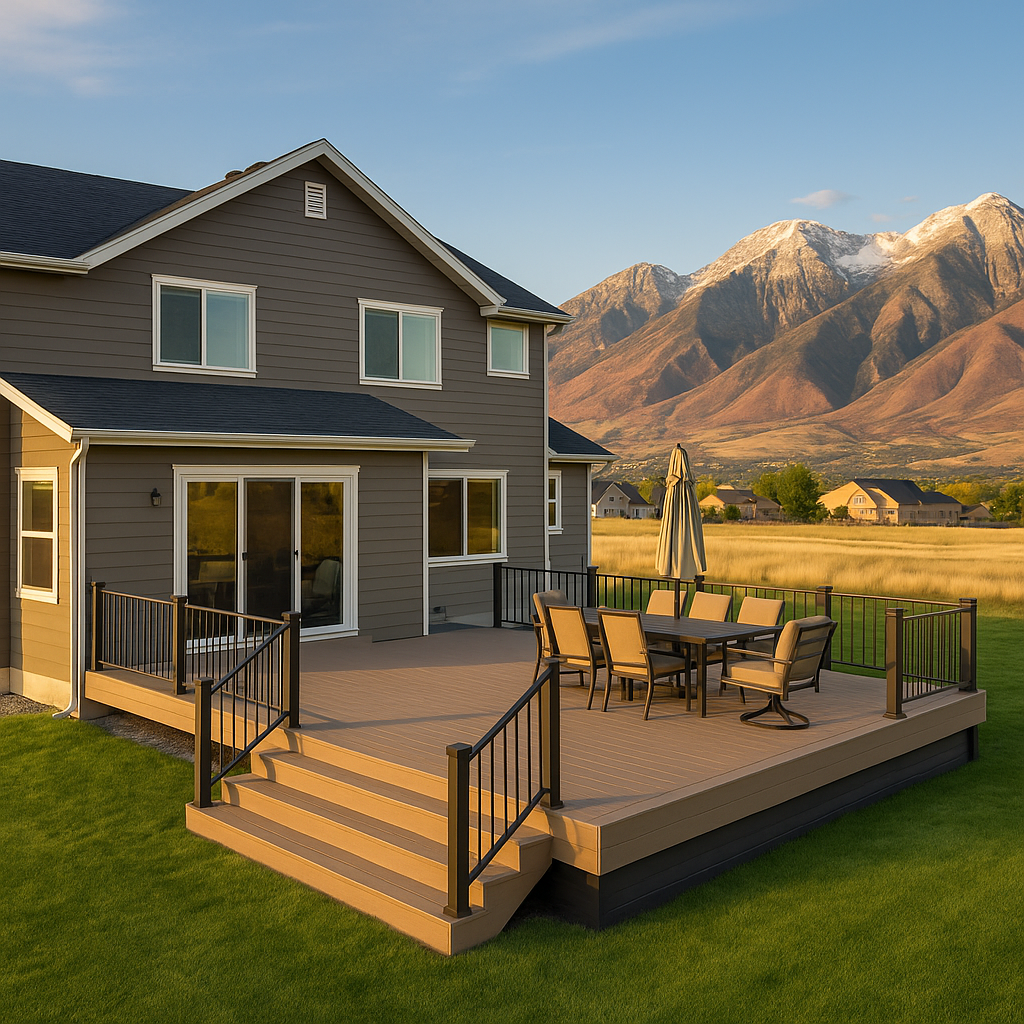
If you’re a Salt Lake City homeowner dreaming about backyard breakfasts with the Wasatch waking up in the distance, a Trex deck Installation can make that picture real. Trex is tough, low-maintenance, and good-looking—exactly what a Utah yard needs when you’re dealing with sun, snow, and the occasional canyon wind. Below, Utah Deck Company lays out practical steps that keep the process smooth, the structure solid, and the finish clean. Simple? Yes and no. The steps are straightforward, but getting them right matters. Let me explain.
Why Trex makes sense in Utah’s sun-and-snow climate
Trex is a Composite: Wood fibers mixed with recycled plastics, wrapped in a shell that resists fading and stains. That combo stands up to our high UV and freeze-thaw cycles along the Wasatch Front. Wood swells, splits, and needs stain; composite decking shrugs most of that off. You still wash it, sure, but there’s no annual re-staining or deck drama when a late April snow shows up out of nowhere.
There’s also the quiet benefit: weekends back. Instead of sanding and sealing, you’re grilling, relaxing, or catching a Bees game. And because Trex boards come in rich, consistent Colors, that finished deck looks curated, not cobbled together from a stack picked over at the store.
Green cred matters too. Trex uses recycled Materials, which fits right in with a city that loves hiking, skiing, and keeping our mountains clean. It’s a small thing, but it adds up.
Permits, plans, and local code: start right, save headaches
Permits can feel like red tape, but they protect you, your neighbors, and your home’s value. Salt Lake City follows the International Residential Code with local amendments. The cliff notes:
- Permits and inspections: Most decks need a building permit in SLC. Expect footing, framing, and final inspections. It’s not hard—just structured.
- Frost line: Around 30 inches in much of the valley. Footings should extend below that line. Deeper in colder pockets; check with the city or county.
- Setbacks and HOA: Property setbacks and HOA guidelines can guide size, height, or rail styles.
- Call 811: Blue Stakes of Utah. Mark utilities before digging. It’s free and could save you a heart-stopping moment.
Quick reality check: skipping permits can slow a home sale later. Appraisers and buyers ask questions. We see it often. Do it right now, and future-you will be grateful.
Choose the right Trex line and a layout that fits your life
Trex has several lines. All are durable, but the finish and price vary. Here’s a fast look you can actually use.
| Line | Look and Use | Utah Notes |
|---|---|---|
| Trex Transcend | Premium color depth; most scratch and fade resistance. | Great for big families or rentals; holds up to heavy traffic and snow shovels. |
| Trex Select | Clean, classic look; mid-tier performance. | Solid everyday choice for patios and mid-size decks. |
| Trex Enhance | Budget-friendly; lighter profile. | Good for simple designs; mind joist spacing and support. |
Layout-wise, think lifestyle. Do you need room for a smoker and a grill? A spot that catches shade in July but still sees sun in March? Many Salt Lake homeowners pick a two-level layout: a dining level near the kitchen door and a lower lounge pad pointed at the mountains. We often frame a picture-frame border with a contrasting color so the deck looks intentional, not just installed.
And because Trex decking can run either perpendicular or diagonal, remember the rule of thumb: diagonal decking wants tighter framing (more on that in a minute).
Site prep and footings that survive our winters
Here’s the thing: great decks begin below ground. We stake and string the footprint, then check square with the 3-4-5 rule or diagonal measurements. Drainage matters. Ideally, the surface slopes slightly—about 1/8 inch per foot—away from the house. Water should exit gracefully, not lounge under your beams.
Footing choices
- Concrete piers: Classic. Dig below the frost line, set Sonotubes, and pour. Use galvanized post bases.
- Helical piers: Fast, clean, and strong. Great in tight yards. They shine in our clay soils and avoid excavation mess.
Attaching to the house? A ledger board mount demands precision. We flash it with butyl membrane and metal Z-flashing—no exceptions. And if you’ve got brick veneer, don’t bolt through it. That’s a no-go. We build a free-standing deck with a small gap from the house instead.
Framing for composite decking: tighter, straighter, smarter
Composite moves differently than wood decking. It prefers firm, even support. We build to or above code, then add a few pro touches.
- Joist spacing: 16 inches on center for boards laid straight; 12 inches for diagonal installs per the Trex installation guide.
- Crown and plane: All joists crowned up, and we plane or shim to eliminate dips. The flatter the frame, the tighter the finished look.
- Joist and beam protection: Butyl joist tape over tops and cuts extends life and reduces squeaks.
- Seam blocking: Add blocking where two boards meet and under picture-frame borders.
- Hardware: Use galvanized hardware or stainless in wet zones; Simpson Strong‑Tie hangers are our go-to.
It sounds fussy. It is—by design. A great frame is the quiet hero under every smooth, long-lasting deck.
Decking installation: fasteners, gaps, and clean lines
Now for the satisfying part: laying boards. We stage the bundles in the shade, mix boards from different packs for color consistency, and snap chalk lines for trustworthy reference.
Fasteners and spacing
- Hidden fasteners: Trex Hideaway clips or CAMO clips lock boards cleanly with consistent gaps.
- Face screws: Use color-matched screws at picture-frame borders, stairs, and where required by code.
- Gapping: Follow Trex’s temperature chart. Side-to-side gaps are often around 1/8 inch; leave more at structures for airflow.
We like a breaker board down the center on long runs. It adds style and avoids a row of lined-up butt joints that can telegraph across the deck like piano keys. For cuts, a sharp composite blade on a miter saw makes clean edges. Keep blades cool; composite can heat up on hot days and smear if you rush. And yes, cut ends get hidden by picture frames or fascia whenever possible.
Railings, stairs, and the last 10 percent that makes it sing
Rails do two jobs: safety and style. In Utah, residential guard height is typically 36 inches for decks over 30 inches above grade. We keep baluster spacing under 4 inches and mount posts to blocking, not just sheathing. Trex has solid rail systems—Transcend, Select, and Signature aluminum—that match the boards or contrast for a modern look.
Stairs deserve attention. Closed stringers with solid blocking feel rock steady. Add riser lighting for evening safety and ambience. On the main level, fascia should be vented at the bottom edge so air can move; sealed skirts can trap moisture and shorten the life of framing. Small details, big results.
Winter note: use a plastic shovel on composite and calcium chloride for ice when needed. Rock salt can be harsh, and steel edges can scuff the cap.
Maintenance in a nutshell: keep it clean, keep it cool
Trex is low-maintenance, not no‑maintenance. But the routine is simple.
- Wash: Hose and a mild soap a few times a year. Soft brush for grime in shady corners.
- Grease and rust: Tackle spills sooner rather than later. A gentle household degreaser works well.
- Pressure washing: If you must, use a wide fan tip and keep it moving. Stay at least 8 inches off the surface.
That’s basically it. No staining. No sealing. No Saturday lost to a paint tray.
Common mistakes we fix all the time
We’re a Salt Lake City deck builder, and patterns appear. Honestly, we see the same five issues week after week.
- Missing ledger flashing: Water sneaks behind, and rot plays the long game.
- Under-supported stairs: They feel bouncy on day one and worse by year two.
- Too-wide joist spacing: Composite needs closer framing, especially on diagonals.
- Seams without blocking: Butt joints drift and lift with the seasons.
- Poor drainage: Flat pads trap water; decks stay damp, and everything suffers.
They’re all avoidable with planning, a level, and a little patience.
DIY or hire Utah Deck Company? A quick, honest look
You can absolutely DIY a Trex deck installation in Salt Lake City if you’re handy and have the time. You’ll need a miter saw, impact driver, levels, string lines, and the patience to check every line twice. Expect a few weekends for a mid-size deck.
Hiring a pro saves time and prevents the “wish we had known that” moments—like discovering a veneer wall won’t take a ledger or that your planned stair run needs an extra landing to meet code. We build clean frames, pull permits, and handle inspections. More importantly, we plan the small stuff: where lights tie in, where snow will pile, how the grill sits so smoke misses your favorite chair.
Cost varies by size, elevation, rail type, and product line. Transcend with aluminum rails costs more up front, but it’s the tank of composites—long-term value if you’re staying in the home. Enhance stretches the budget on simple shapes. Either way, clear drawings and a tidy scope prevent surprises.
Ready to sketch your perfect deck?
If this all sounds good—and you want a deck that looks dialed on day one and still feels solid years from now—let’s talk. Utah Deck Company designs and builds Trex decking across the valley with clean lines, smart framing, and no corner-cutting. We’ll walk your yard, listen to how you live, and map out a plan that fits your budget and your weekends.
Call 801-921-6826 or Request a Free Quote. You know what? That first conversation often solves half the puzzle—measurements, permits, and a design you can picture from the back door. Let’s build something you’ll love looking at every single day.