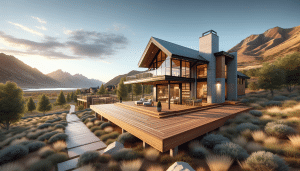


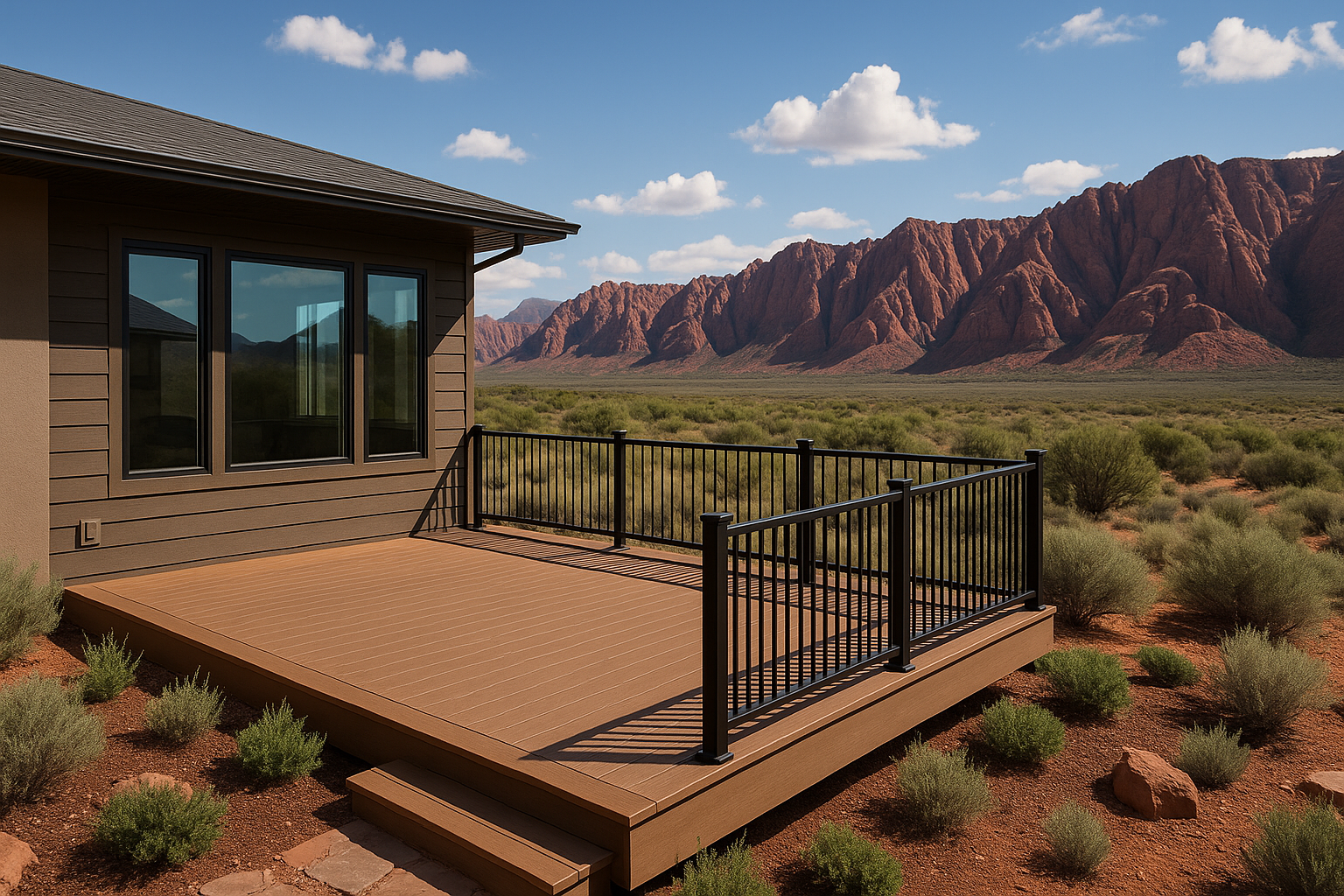
When you live along the Wasatch Front, you can’t help but love the outdoors. That’s exactly why many Salt Lake City homeowners want a beautiful deck that’s easy on the planet. If you’ve wondered whether a Composite deck can actually be green, you’re not alone. Honestly, it sounds a bit contradictory at first. Plastic and sustainability in the same sentence? Let me explain why Trex decking keeps showing up as a smart, earth-friendly pick—especially here in Utah’s high-desert climate.
Contents
- 1 The short story: Trex makes new boards from old stuff
- 2 Less maintenance, fewer chemicals, cleaner air
- 3 Built for Utah’s sun, snow, and freeze–thaw
- 4 Wait, plastic in a deck? Isn’t that bad?
- 5 Less jobsite waste—more smart building
- 6 A quick look: Trex vs. Wood vs. PVC
- 7 Energy, heat, and comfort: does color really matter?
- 8 Utah water sense: smaller lawn, bigger impact
- 9 Real-world costs and value that circle back to the planet
- 10 Quick ways to make your Trex deck even greener
- 11 What about safety and fire ratings?
- 12 Why Utah Deck Company for Trex in Salt Lake City
- 13 Ready to build a greener deck? Let’s talk.
The short story: Trex makes new boards from old stuff
Trex boards are made from about 95% recycled Materials. That includes reclaimed Wood fibers and plastic film from things like grocery bags and shrink wrap. The wood content isn’t cut from forests; it’s recovered. The plastic isn’t fresh off a petroleum line; it’s diverted from landfills. You know what? That’s a big deal. It means your deck becomes part of a large-scale recycling story instead of a disposal problem.
Trex also runs the NexTrex program, which partners with stores and communities to collect clean plastic film for reuse. Many Utah shoppers already return bags at local grocery drop-offs, and a surprising amount of that material ends up as new composite boards. No new trees. Far fewer truckloads of waste. You get a durable deck without the guilt of cutting down hardwoods.
Less maintenance, fewer chemicals, cleaner air
Traditional wood decks need regular sanding, staining, and sealing. Those finishes often contain VOCs and solvents. They smell strong because they off-gas. Multiply that by years of upkeep and you get a lot of chemical use and extra trips to the home store.
Trex decking doesn’t need staining or sealing. Most of the time, a mild soap-and-water wash does the trick. Fewer coatings mean fewer emissions. Fewer cans and rags headed to the trash. Fewer Saturdays spent breathing in fumes. Plus, no pressure-washing marathon every spring. In our dry climate, that also means less water use—helpful for a region that keeps an eye on every drop.
Built for Utah’s sun, snow, and freeze–thaw
Salt Lake City winters bring freeze–thaw cycles; summers bring intense UV. That swing can be tough on natural wood. Boards twist and crack, fasteners loosen, stains peel. Replacing warped boards isn’t just a headache—it’s also wasteful.
Trex composite decking resists warping and splintering. The cap layer helps protect against fading and staining. Longer life means fewer repairs, fewer replacements, and less waste overall. Even better, durability shrinks the environmental footprint over the deck’s lifetime. It’s simple math: the longer it lasts, the less you throw away.
Wait, plastic in a deck? Isn’t that bad?
Fair question. Plastic sounds un-green at first blush. But here’s the thing: Trex uses recycled plastic film that’s notoriously hard to upcycle in other products. By turning it into something long-lasting—a deck you’ll enjoy for decades—those materials skip the landfill and the ocean. And because Trex boards don’t need regular chemical coatings, total environmental impact, year after year, trends lower than many conventional options.
There’s also the ripple effect. A long-lived deck lowers the need for new lumber, fresh paint, additional transport, and repeated disposal. The product becomes a one-and-done Installation rather than a constant maintenance cycle.
Less jobsite waste—more smart building
On installation day, a little planning goes a long way. Composite boards are consistent—fewer warped or unusable pieces means less scrap. As builders, we use careful layouts and standard lengths to reduce off-cuts. Packaging materials can be separated and recycled. Even the cleaning routine is simpler; we’re not leaving behind empty stain cans or saturated rags.
End-of-life is getting better too. While you can’t toss composite in a curbside bin, some programs accept larger loads of composite for specialized handling, and Trex keeps expanding plastic film collection on the front end. It’s a stepwise improvement that adds up.
A quick look: Trex vs. Wood vs. PVC
| Material | What goes into it | Environmental notes |
|---|---|---|
| Trex Composite | Recycled wood fibers + recycled plastic film | Reduces landfill waste; avoids deforestation; minimal ongoing coatings |
| Traditional Wood | Virgin lumber; staining/sealing products | Renewable resource but needs routine chemicals; potential for frequent Replacement |
| PVC Decking | Virgin plastics (no wood content) | Low maintenance but usually less recycled content; end-of-life options vary |
Short version: if you want a lower-maintenance deck with a strong recycled story, Trex decking leads the pack.
Energy, heat, and comfort: does color really matter?
On a sunlit July afternoon in Sugar House or Holladay, color choice matters. Lighter shades of Trex composite decking reflect more heat and stay more comfortable underfoot. That can mean you use fewer misters or fans. If your deck adjoins a south-facing wall, a lighter color can shave a bit of heat load off the adjacent interior too.
Consider adding shade elements—pergolas, sail shades, even a small vine trellis. Not only does shade increase comfort; it reduces surface temperature swings, which is good for materials and for the people using them. And, frankly, it makes the lemonade taste better.
Utah water sense: smaller lawn, bigger impact
Another surprising benefit: a deck reduces irrigated lawn area. Less grass means less watering. In a region that cares about the Great Salt Lake and long-term water levels, that matters. Many homeowners use a deck to anchor a xeriscaped yard, gravel paths, and native plants—beautiful, low-water, pollinator-friendly spaces. Programs like Localscapes offer design resources that pair nicely with a composite deck.
So yes, a deck can be part of a bigger water-wise plan. It’s not just style; it’s stewardship, done one backyard at a time.
Real-world costs and value that circle back to the planet
Trex usually costs more upfront than basic pine. But the lifetime curve tells a different story. No annual stain purchases. Fewer board swaps. Less time driving to the store. If you pencil it out over 10–15 years, costs often even out—or tilt in Trex’s favor. What’s less obvious is the environmental savings baked into that same curve: fewer materials consumed, fewer chemicals used, fewer disposals.
And if you care about resale, buyers love “low-maintenance” on a listing. A beautiful Trex deck signals care and quality—without the future upkeep. It’s a win for your weekend schedule and for the planet.
Quick ways to make your Trex deck even greener
- Pick a lighter color for cooler surfaces and lower heat buildup.
- Use LED or solar lighting on steps and rails; it’s safer and sips energy.
- Right-size the frame with proper joist spacing; less overbuilding, same strength.
- Choose hidden fasteners for longevity and easier board replacement down the road.
- Clean with mild soap and a soft brush; no harsh chemicals needed.
- Recycle packaging and plastic wrap from delivery through local programs.
Small decisions compound. A greener install becomes a greener deck for years to come.
What about safety and fire ratings?
Quick note for our foothill neighborhoods: many composite boards, including Trex, carry a Class C fire rating. That’s typical for decking but not fireproof. Use a grill mat, keep ember sources in check, and follow local fire guidelines—especially during dry spells. Responsible use keeps your deck and the surrounding landscape safer.
It’s a slight detour from the “environmental” topic, but safety protects what you’ve built and the habitat around it. Worth mentioning, right?
Why Utah Deck Company for Trex in Salt Lake City
We build decks that last through lake-effect snow and summer sun. Our crews work with Trex decking in Salt Lake City every week—so we know the right board profiles, fasteners, and framing details for our climate. We plan cuts to reduce waste, separate packaging for recycling when possible, and recommend Colors and layouts that boost comfort and longevity.
We also help you navigate local codes and HOA standards, pick railings that match your style, and choose add-ons like lighting or privacy screens that don’t rack up energy use. You get a clean, sturdy installation and a greener backyard space—without the constant maintenance chores.
Ready to build a greener deck? Let’s talk.
If you’re thinking about eco-friendly decking that still looks amazing, we’re here for it. Utah Deck Company designs and builds with Trex all across the Salt Lake Valley. Tell us about your space, your wish list, and your timeline—we’ll help you plan a deck that’s kinder to the planet and easy to love.
Call us at 801-921-6826 or Request a Free Quote today. We’ll bring samples, straight answers, and a design that fits your home and our landscape.