


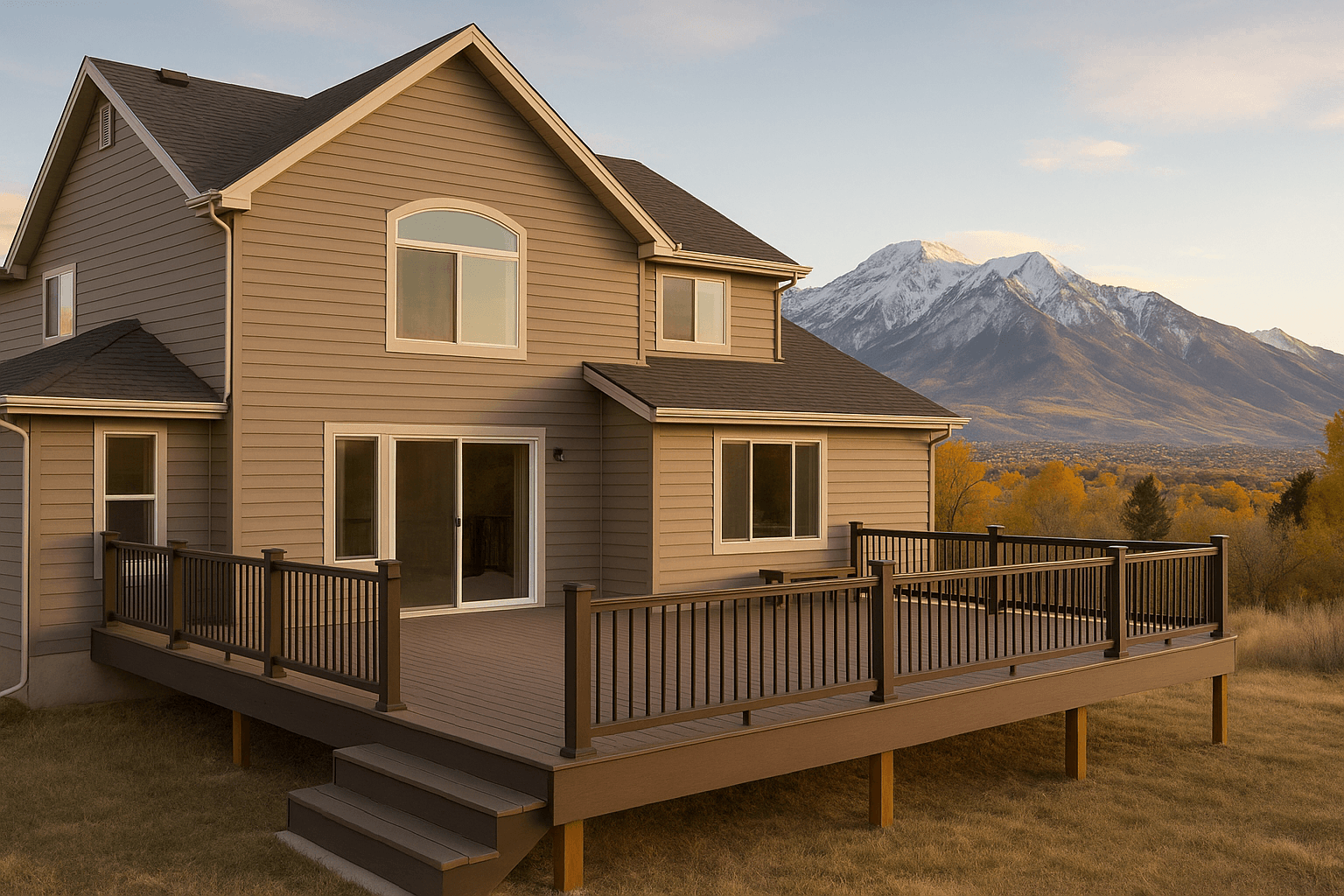
Thinking about a new deck in Salt Lake City and stuck between Composite and Wood? You’re not alone. A lot of Utah homeowners want the warmth of real Timber, but also the sanity-saving ease of modern Materials. Here’s the thing: the right choice depends on how you live, how our high-altitude climate behaves, and how much time you want to spend maintaining your outdoor space. As local builders, we’ve seen what lasts in our sun, snow, and freeze–thaw cycles—and what doesn’t. Let me explain what’s changed, what still matters, and where the future of deck materials is headed for Utah.
Contents
- 1 What actually matters in a Salt Lake City backyard
- 2 Composite decking: what it is and why it’s trending
- 3 Real wood: timeless feel with real upkeep
- 4 Cost reality check over 15 years
- 5 Heat, color, and texture: comfort underfoot
- 6 Structure matters more than you think
- 7 Sustainability check, without the buzzwords
- 8 So…what’s the future? A blended approach
- 9 Picking what fits your life
- 10 Why homeowners call Utah Deck Company
- 11 Ready to plan your deck?
What actually matters in a Salt Lake City backyard
Decks along the Wasatch Front deal with a little bit of everything: blazing UV at elevation, sudden temperature swings, dry air, spring rain, and winter ice. Add in canyon winds and you’ve got movement, moisture, and sun stress working your boards from every angle. So materials need to be stable, colorfast, grippy when wet, and forgiving when the thermometer whips from 20 to 95 in the same week. That combination narrows the field fast.
And because many lots here slope, framing and drainage are big deals too. A beautiful surface won’t help if meltwater sits under the joists or if the ledger isn’t flashed properly. We build for snow load, shade lines, and the way the sun hits your backyard in July. Those small choices—spacing, fasteners, flashing—make a deck feel solid for years, not just the first summer.
Honestly, that’s why the material conversation isn’t only about looks. It’s about how the deck behaves in real Utah weather.
Composite decking: what it is and why it’s trending
Composite decking blends wood fibers with recycled plastics, and many modern boards are “capped” with a durable shell that resists fading, staining, and scratches. Popular brands around here include Trex, TimberTech, and Fiberon. Some lines are composite core; others are capped polymer with no wood content at all. Either way, the goal is simple: a low-maintenance surface that stays good-looking with a quick wash and no yearly staining.
Why composites make sense in our climate
In Salt Lake City’s dry, sunny summers, capped boards shrug off UV better than most stains. They don’t splinter, they don’t warp like thirsty decking can, and their color stays tidy. You’ll still want to clean them—pollen, dust, and BBQ spills happen—but a hose, a mild cleaner, and a soft brush usually do the trick. For a lot of homeowners, that “easy” factor is the clincher. If you want a low-maintenance deck that looks sharp during backyard season without yearly projects, composite has the edge.
Trade-offs you should know
- Heat underfoot. Dark boards can run hot in full sun. Lighter Colors and shaded sections help, and some polymer lines run cooler than others.
- Cost up front. Material cost is higher than many wood options, though the upkeep over time is much lower.
- Movement. Composites expand and contract along their length. Good builders plan gapping and blocking to keep things tight and squeak-free.
You know what? Most of the “composite horror stories” you’ve heard came from early-generation boards, or from decks installed without proper spacing and drainage. Today’s better lines are tougher, prettier, and more consistent—and they’re built with our kind of climate in mind.
Real wood: timeless feel with real upkeep
There’s no denying it—real wood decking has a feel you can’t fake. Cedar smells like summer. Redwood carries that classic Utah look. Even pressure-treated pine can be handsome with the right stain. Hardwoods like Ipe are dense and elegant. If you love character and natural grain, wood still steals hearts.
Where wood shines
- Authentic warmth. The grain, the subtle color shifts, the way it ages—wood brings a living texture to a yard.
- Lower initial cost. Pressure-treated or many cedar/redwood options start below composite for the build.
- Cooler feel. Wood usually runs cooler underfoot than dark composites in full sun.
What to plan for with wood
- Regular maintenance. Expect cleaning and re-sealing or re-staining every 1–3 years here. Our UV and dryness wear finishes faster.
- Color change. Left natural, wood will gray. It’s lovely to some, not to others. Stains help, but they fade.
- Movement and checks. Boards swell in spring and shrink in August. Small splits and cupping can happen; good fastening reduces it but doesn’t erase it.
We’ll just say it: if you like working on your home and don’t mind a weekend project every so often, wood can be a joyful choice. If you’re stretched thin, the upkeep can feel like one more chore.
Cost reality check over 15 years
Here’s a quick look at what homeowners usually spend in our area. Prices vary with design, height, and railing choices, but these ranges will help you compare apples to apples.
| Material | Approx. installed cost per sq ft (SLC) | Estimated maintenance over 15 yrs |
|---|---|---|
| Composite (capped) | $45–$75 | $0.50–$1.50 per sq ft total |
| Cedar/Redwood | $35–$55 | $25–$40 per sq ft total |
| Pressure-treated | $25–$40 | $20–$35 per sq ft total |
| Ipe (hardwood) | $60–$100 | $25–$40 per sq ft total |
Note: Railings, stairs, lighting, and elevated structures can shift these numbers. Framing is usually pressure-treated lumber for strength, regardless of the surface. The takeaway is simple: composite often costs more to build but far less to maintain, making the long-run spend similar—or sometimes lower—than wood.
Heat, color, and texture: comfort underfoot
Utah sun is no joke. Dark anything absorbs heat. That includes decking. Composites can run warm on a bluebird July day, especially in deep browns or blacks. The fix is straightforward: choose lighter colors, add shade (a pergola, a sail, or a bit of tree canopy), and consider lines designed to run cooler. Some polymer boards have heat-reflective tech that makes a real difference.
Traction matters too. Modern composites carry improved textures and better wet-grip ratings. Wood does well when clean, but algae and dust can make it slick. A quick wash keeps either surface safer—especially on stairs. We also design with picture-framed borders and directional patterns to manage traffic flow and reduce stubbed toes and lifted edges. Small details; big comfort.
Structure matters more than you think
The deck you see gets all the glory, but the deck you don’t see does all the work. We build frames with pressure-treated lumber, hardware rated for ACQ treatment, and thoughtful details like ledger flashing, membrane-topped joists, and proper gapping at the house. For composite, we tighten joist spacing where the manufacturer calls for it—often 12 inches on center for diagonals—to prevent bounce. We use hidden fasteners or color-matched plugs (think CAMO or Cortex) for clean surfaces that don’t snag socks.
Drainage gets love too. Snow should melt and move through—never sit under boards all winter. If your deck hugs the ground, we’ll talk about ventilation and ground moisture barriers. If it’s elevated, we’ll talk about wind uplift, bracing, and a safe, solid stair. These aren’t “extras.” They’re the backbone of a deck that feels tight and stays straight.
Sustainability check, without the buzzwords
Composites often use recycled content—Trex famously uses reclaimed plastic films and sawdust—and they last a long time. Less restaining, fewer chemicals, less waste. That’s a real benefit. Wood is renewable and can be sourced responsibly; FSC-certified cedar or redwood is a meaningful choice, and many homeowners love that it’s biodegradable at the end of life.
There’s no one “greenest” option for everyone. Longevity matters. Sourcing matters. The way you maintain the deck matters. We’ll shoot you straight about what’s available locally and what lines up with your goals.
So…what’s the future? A blended approach
The future on the Wasatch Front looks hybrid. Many families go with a composite surface and aluminum or composite railings for low upkeep, then add real wood accents—cedar skirting, a timber pergola beam, or a stained bench—to warm it up. Lighting tucked into stair risers, hidden fasteners, and clean picture-framed borders give a modern look without feeling cold.
We’re also seeing smarter layouts: a shady nook for lunch, a sunny edge for spring mornings, maybe a privacy screen for canyon-breeze days. If your home is in Sugar House, Daybreak, Holladay, Sandy, or Draper, you’ve probably seen this look around the neighborhood. It’s not flashy. It’s just livable.
One more practical note: elevated decks, rail heights, and footings must meet code. Deck permits in Salt Lake City are straightforward, and we handle them—plans, engineering if needed, and inspection scheduling—so your project stays clean and compliant.
Picking what fits your life
Here’s a quick gut check to make the call feel easier:
- Pick composite if you want low upkeep, steady color, and a deck that’s ready for guests after a quick rinse.
- Pick wood if you love the natural look, don’t mind seasonal projects, and want cooler boards in full sun without shade.
- Go hybrid if you want easy care on the walking surface but still crave a few warm wood details.
Still unsure? We get it. Bring a coffee and come run your hand across actual boards. Seeing texture and color in person, in Utah light, makes the decision feel obvious.
Why homeowners call Utah Deck Company
We build decks that make sense for Salt Lake City living. From classic redwood to premium TimberTech and Trex, we know how each board behaves when the lake breeze picks up, when the first snow dusts the foothills, and when July heat hits hard. You’ll get design help, 3D visuals, clean framing, and a surface that wears well. No surprises. Just a great deck you actually use.
And because we’re local, we’ve already worked with HOAs and inspectors across the valley. We keep your project moving, from permits to punch list.
Ready to plan your deck?
If you’re leaning toward composite, wood, or a smart mix of both, we’ll help you get it right the first time. Call Utah Deck Company at 801-921-6826, or click to Request a Free Quote. We’ll visit your home, talk through design and budget, and give you straight pricing—no pressure, no guesswork. Your backyard’s about to feel a lot bigger.