

Planning a new deck in Salt Lake City should feel exciting, not stressful. If you’re leaning toward low-maintenance Composite, you’re already on a smart path. But here’s the thing: even great products get a bad rap when they’re installed the wrong way. We’ve seen it. Gaps too tight. Ledger flashing skipped. Boards squeaking in the summer heat. This guide from Utah Deck Company lays out the most common mistakes we see with Trex decking Installation—and exactly how to avoid them—so your new outdoor space looks sharp and lasts through our Utah seasons.
Contents
- 1 Why Trex makes sense up here on the Wasatch Front
- 2 Start smart: permits, frost footings, and a clear plan
- 3 Framing mistakes that bite later
- 4 Handling and layout: small choices, big payoff
- 5 Fasteners and gaps: the heart of a clean Trex install
- 6 Rails, posts, and code details you don’t want to miss
- 7 Fascia, risers, and airflow: finishing without future headaches
- 8 Living with Trex in Utah: simple care, real comfort
- 9 DIY or call the pros? A quick reality check
- 10 Quick checklist: avoid these Trex installation slip-ups
- 11 Ready to build a deck that feels right—season after season?
Why Trex makes sense up here on the Wasatch Front
Salt Lake City throws a lot at a deck—high UV, dry summers, cold snaps, spring snow, and those canyon winds. Composite decking like Trex handles it well. It doesn’t need staining, it resists fading better than Wood, and it won’t splinter when your kids run barefoot after a sprinkler day. You still need good framing, drainage, and correct spacing. But once it’s in right, upkeep is light. Honestly, that’s why so many homeowners call us every spring.
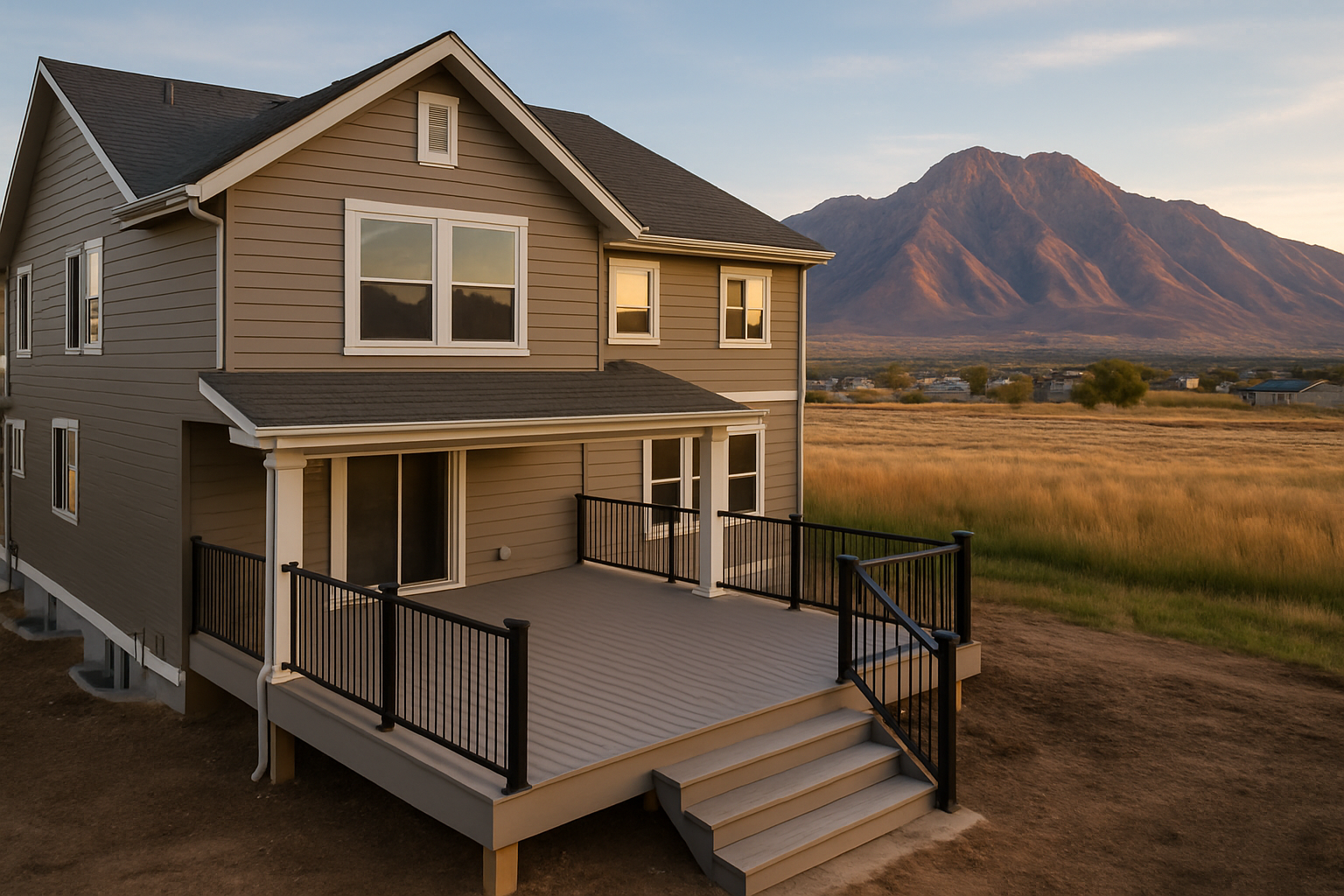
You know what? There’s also curb appeal. Trex Colors hold. Edges stay crisp. Add a picture-frame border and clean fascia, and the whole thing reads “custom,” even if the footprint is simple.
Start smart: permits, frost footings, and a clear plan
Before the first hole is dug, check your plan against local code. Salt Lake City follows the International Residential Code, and most decks need a permit. Footings must extend below frost depth—around 30 inches in much of Salt Lake County, but confirm with your building department. Also, call Blue Stakes of Utah 811 before digging. No surprises with utilities.
Design-wise, think beyond the rectangle. Where will the grill live? Shade in late afternoon? Views of the valley? A little planning now helps you avoid weird seams or end cuts later. Map your joists, note where butt joints land, and plan blocking. If you’ll run boards at 45 degrees, set joist spacing at 12 inches on center. Perpendicular? 16 inches on center works for most Trex lines.
Framing mistakes that bite later
Trex looks best on a flat, stiff frame. Even small waves in the joists telegraph through composite boards. Let me explain: composites mirror what’s below. So if the frame has humps, you’ll see them forever.
- Skipping ledger flashing. Water sneaks behind the ledger and rots your house. Always install metal flashing that tucks under the siding above and over the ledger. Leave a drainage gap behind the ledger with spacers, and never attach to brick veneer.
- Joists too far apart. For straight runs, keep them at 16 inches on center. For 45-degree decking or heavy traffic, tighten to 12 inches on center. Stair stringers should be about 9 inches on center with composite treads.
- No crown check. Crown joists up and plane the tops if needed. It’s fussy work, but it keeps everything true.
- No joist tape. A strip of self-sealing butyl like Trex Protect or Grace Vycor on joists and the ledger adds years to your frame. It blocks moisture and stops screw squeaks.
- Missing blocking. Add blocking at board butt joints, stairs, and under rail posts. Posts need full framing support plus tension ties per code.
| Common Mistake | What You’ll Notice | Quick Fix |
|---|---|---|
| Joist spacing too wide | Board bounce; fasteners squeak | Add joists or sister; tighten spacing to 12–16 in. O.C. |
| No ledger flashing | Water stains; soft wall sheathing | Install proper metal flashing and seal penetrations |
| No gapping at board ends | Cupping; ends press together | Follow Trex gap chart; maintain 1/8–1/4 in. as temps require |
| Wrong screws or nails | Mushrooming, rust, warranty issues | Use Trex-approved screws or Trex Hidden Fasteners |
Handling and layout: small choices, big payoff
Trex boards don’t need “acclimation,” but temperature does matter during cuts and spacing. Keep bundles supported and out of direct, baking heat when possible. Don’t drag boards across the driveway—they will scuff.
Lay out your field from the most visible edge. Many homeowners love a picture frame border because it hides cut ends and adds polish. If your deck is wide, plan where butt joints land and stagger them. Add blocking under every joint.
Color tip: Mix boards from at least three different bundles as you go. That evens out natural color variation and looks more like real wood. It’s a tiny step that makes a big difference.
Stairs? Keep stringers tight—about 9 inches on center for composite treads—and use continuous treads or dedicated stair boards with screws specified for stairs.
Fasteners and gaps: the heart of a clean Trex install
Most homeowners want a fastener-free look. We agree. Trex’s hidden system is clean and reliable when used right.
- Start and finish boards. Use Trex starter clips at the first board, then Trex Hidden Fasteners for the field. End with a finish clip or color-matched screws at the last board.
- Approved screws. When face-screwing (stairs, picture-frame borders, or where hidden clips don’t apply), use Trex-approved, color-matched composite screws. They cut a clean hole and prevent “mushrooming.”
- Spacing matters. Side-to-side spacing is typically about 1/8 inch. End-to-end gaps vary with temperature at install—often between 1/8 and 1/4 inch. Keep 1/4 inch where boards meet a wall or post to allow airflow.
- Angle installs. Running boards at 45 degrees? Reduce joist spacing to 12 inches on center and still use the same clip cadence.
It sounds fussy. It is—and it’s worth it. Composite expands and contracts with temperature. Give it room and it behaves. Pin it tight and you’ll hear it talk back in July.
Rails, posts, and code details you don’t want to miss
Handrails and guards are where safety meets style. In Salt Lake City, guard height is usually 36 inches minimum for residential decks. Baluster spacing should not allow a 4-inch sphere to pass. Add solid blocking where posts meet framing, then use through-bolts and approved hardware—not lag screws alone for guard posts.
For stairs, add a continuous graspable handrail. Landings must be solid and meet code. We also recommend tension ties at critical connections to resist the Wasatch winds. It’s not glamorous, but it’s what keeps a deck sturdy for the long haul.
Fascia, risers, and airflow: finishing without future headaches
Fascia cleans up the look, but it needs breathing room. Follow Trex guidelines for gapping and use manufacturer-approved fascia screws or fastener plugs. Keep the space under the deck ventilated so framing can dry after snow or summer storms. If your deck is low to the ground, plan for airflow with lattice or well-placed vents.
One more thing: don’t trap water. Slope the frame a slight 1/8 inch per foot away from the house when possible, and never block weep paths with solid skirting that has no vents.
Living with Trex in Utah: simple care, real comfort
Maintenance is light but not zero. Rinse dust from Great Salt Lake winds and spring pollen with a garden hose. For shaded spots, use a gentle deck wash and a soft brush. A pressure washer can work on Trex, but keep it under 3100 psi with a fan tip and stay at a safe distance. Ice? Use calcium chloride in winter and rinse when the melt is over.
Furniture feet matter. Use non-marking pads under chair and table legs. If you grill, add a mat. Composite resists stains, but grease can be stubborn if it bakes in the sun.
DIY or call the pros? A quick reality check
We’re all for a good weekend project. A small, low deck with straightforward framing? Sure. But once you add a second story, complicated stairs, custom borders, or a tricky ledger, the learning curve gets steep—and mistakes get expensive. Manufacturer warranties also expect you to follow specs. If something goes sideways, proof of correct install matters.
Utah Deck Company builds in this climate every week. We know the quirks—snow loads, hillside lots, sun angles that turn surfaces hot in July, even the way afternoon winds hit decks in the Avenues versus Daybreak. That local experience saves time and saves rework.
Quick checklist: avoid these Trex installation slip-ups
- No permit or plan. Verify code, frost depth, and layout before you build.
- Wrong joist spacing. 16 in. O.C. for straight runs; 12 in. O.C. at 45 degrees; ~9 in. O.C. for stair stringers.
- Skipping ledger flashing. Always flash and leave a drainage gap.
- No joist tape. Protect framing now; it pays off later.
- Tight gaps. Follow Trex guidelines for side and end gaps based on temperature.
- Random butt joints. Plan seams; add blocking; consider a border.
- Wrong fasteners. Use Trex Hidden Fasteners or approved screws only.
Keep this list handy and you’re already ahead of most builds we’re asked to “fix.”
Ready to build a deck that feels right—season after season?
If you want a deck that looks custom, drains right, and stays quiet underfoot, we’re here for it. Utah Deck Company installs Trex decking across Salt Lake City and nearby communities, with clean details and code-compliant structure baked in. Tell us what you’re picturing—morning coffee with snowy peaks, game day with friends, or a simple spot to breathe after work—and we’ll turn it into a plan that fits your home and budget.
Call us now at 801-921-6826 or click below to Request a Free Quote. Your deck should feel easy. We’ll make sure it does.