

Picture this: Wasatch peaks in the distance, dinner on the grill, and a deck that doesn’t splinter, warp, or need a weekend-long staining marathon. That’s the promise of Trex decking, and it’s why so many Salt Lake City homeowners are choosing it. You want something that looks sharp, holds up through snow and sun, and doesn’t steal your Saturdays. Fair. Let’s walk through how to get from rough sketch to a clean, steady deck that feels like it’s always belonged there.
Why Trex just plain works in Salt Lake City
Our weather swings. We go from freeze-thaw cycles in January to high-altitude UV in July. Composite decking in Utah has to be tough. Trex boards are made from recycled Wood and plastics, which means they resist moisture, won’t rot, and don’t need staining. They stay straighter, too. Less cupping. Fewer headaches.
Sun exposure is real along the Wasatch Front, so fade resistance matters. Trex’s cap stock protects color for years—no scrambling to “touch up” boards every spring. Snow? Trex handles it. Clear it with a plastic shovel and call it good.
One more thing we hear a lot: splinters. With Trex decking, you can walk barefoot without fear. That’s not a small perk if you’ve got kids, pets, or you just like that Sunday-morning coffee on the deck feeling.
Start with a plan you can actually build
Here’s the thing—great decks start on paper. We begin with use. Are you hosting big BBQs? Do you need space for a hot tub, or just a small landing and stairs to the yard? Think traffic flow, furniture size, grill clearance, and sightlines. You know what? A quick taped outline on the lawn helps more than you’d think.
Salt Lake City has permit rules, setback guidelines, and structural requirements. Footings need to beat frost (we typically plan for about 30 inches or more), and ledgers must be flashed and fastened right. It’s not glamorous, but it’s the backbone. A clean plan avoids “whoops” later—like discovering the stairs kiss your lilac hedge or the door swing clips the railing post.
- Budget smart. Decide what matters most—size, railing style, lighting—then stack the rest behind it.
- Mind the sun and wind. Check shade patterns at 5 p.m., and think about canyon breezes.
- Privacy and views. Place railings to frame the mountains, not block them.
- Access. Plan snow-clearing paths and a quick kitchen-to-grill line.
Let me explain one layout trick: if your deck is wide, consider a “breaker board” down the middle. It looks polished and controls board lengths. We use it a lot on larger projects for neat seams and better movement control.
Choosing the right Trex board for your budget and style
With Trex, you’re not stuck with one look. You can start practical or go premium. Lighter Colors stay cooler in the high summer sun, darker tones feel rich but may warm up a bit more. We always bring samples to your yard because color changes with light and stone, and even your siding.
Here’s a quick look at popular lines we install around Salt Lake City:
| Line | Look and Feel | Typical Use |
|---|---|---|
| Trex Enhance (Basics/Naturals) | Attractive, budget-friendly caps; subtle grain | Starter decks, rental upgrades, clean backyard refresh |
| Trex Select | Classic colors; simple, balanced look | Mid-range builds, solid everyday durability |
| Trex Transcend (including Lineage) | Richer grain, premium finish, top fade resistance | Showpiece decks, view rail pairings, picture-framed layouts |
Decide between grooved vs. square-edge boards. Grooved edges work with hidden fasteners for a clean face. Square-edge boards fit picture-frame borders, stairs, and areas where you want face screws or color-matched plugs. Both have their place—and the mix is often the sweet spot.
Framing matters more than you think
The frame is the heartbeat of any Trex deck Installation. We use pressure-treated lumber, proper joist hangers, and through-bolts where needed. Joist spacing matters: 16 inches on center for straight runs, 12 inches on center for diagonal or chevron patterns. Add blocking at seams and under rail posts for a rock-solid feel and cleaner lines.
Ledger attachment is non-negotiable. We flash above and behind with self-adhered membrane and metal Z-flashing, then fasten with structural screws (not just lag screws). Water is sneaky—good flashing keeps it out of your house and your deck frame.
Drainage counts. We pitch deck surfaces slightly—about 1/8 inch per foot away from the house when possible. For board spacing, we follow Trex’s guide: keep a gap between boards for drainage and allow end gaps based on temperature during install. It sounds fussy, and it kind of is—but it’s the difference between a crisp, quiet deck and one that creaks or traps water.
Fasteners? We love hidden systems like Trex Hideaway for grooved boards. For picture-frame borders and stairs, we use color-matched screws or the Cortex plug system to keep faces clean while holding tight through Utah seasons.
Installation walk-through, straight talk
Here’s the usual flow we follow at Utah Deck Company—precise, but friendly. We keep you in the loop and the site tidy:
- Layout and set footings. Square lines with string and a story pole; dig below frost depth; pour concrete and set post bases.
- Posts, beams, joists. Plumb, crown-up joists, tight hangers; then blocking and perimeter.
- Flash the ledger. Self-seal membrane, metal flashing, and proper fasteners into solid structure.
- Decking install. Straight starter board, hidden clips, consistent gapping; add a breaker board if needed.
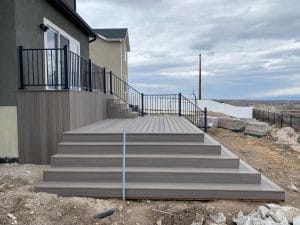
- Picture frame and stairs. Mitered corners, reinforced blocking, smart nosing for safer footing.
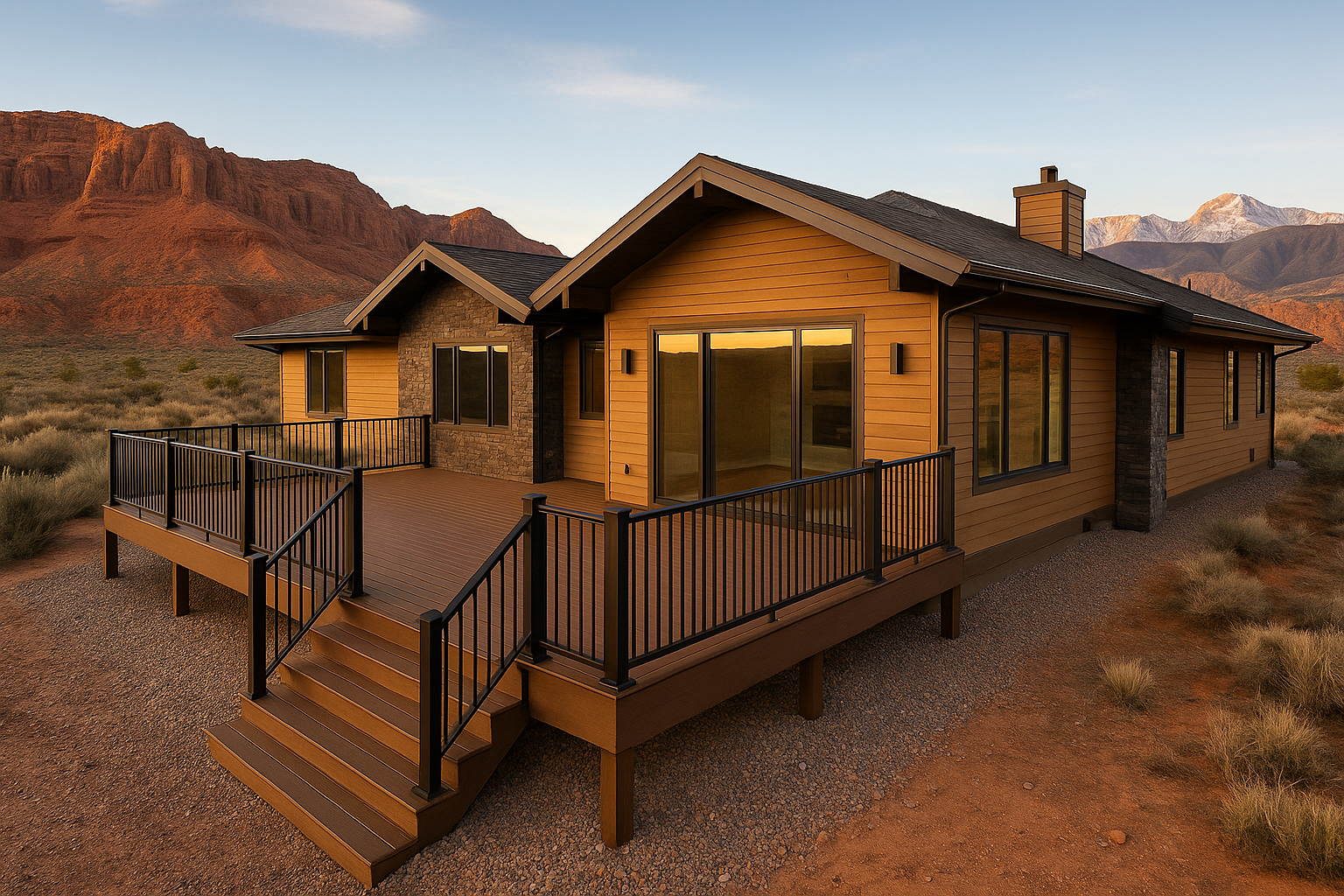
- Railing and details. Trex composite or sleek aluminum like Trex Signature—great for mountain views.
- Final pass. Clean cuts, sand any fuzzed edges, sweep, and walk-through with you.
Tool talk for the DIY-inclined: a quality miter saw, an impact driver, spacers, a track saw for long rips, and a sharp composite blade make life easier. And patience helps—composite boards cut clean, but they reward slow, steady work.
Little details that make it feel custom
Small upgrades pay off every single day. A picture-framed border hides cut ends and adds a finished look. A darker border with a lighter field looks sharp and stays cooler underfoot.
Lighting is another simple win. Recessed stair lights or post-cap lights help on winter evenings and late Jazz games—no fumbling your way to the patio door. We tuck wires cleanly and use low-voltage systems with timers or smart controls, so it all just works.
For fascia, we use fascia-specific screws and an expansion pattern to prevent wavy “oil canning.” It’s a small step that keeps lines straight through heat and cold. Skirting needs ventilation; composite or slatted wood both look great and help the frame breathe.
Winter tips? Use a plastic shovel, not metal. If you need de-icer, a calcium chloride product is safer for composite decking. Rinse in spring. That’s it—soap, water, soft brush. Not exactly a chore list.
DIY or hire? A quick sanity check
Could you build it yourself? Sure—if you have the time, tools, and a tolerance for problem-solving. You’ll need permits, inspections, and the right fasteners and flashing. Honestly, it’s not the hardest project, but it has a lot of steps that need to work together.
Why bring in Utah Deck Company? Speed and finish. We know local codes, how clay soils behave after a storm, how to frame stairs on sloped lots, and how to keep rail posts rock solid. Plus, we help you choose the right Trex decking Salt Lake City homeowners love, and we stand behind the work. That peace of mind is real.
Curious about cost? Every site is different, but most Trex decks we build around the valley fall somewhere in the mid-range to premium bracket depending on size, rail choice, framing upgrades, and extras like lighting or pergolas. We’re transparent, and we’ll show you where each dollar goes—no mystery line items, no surprises.
Frequently asked quick answers
- Can Trex go over my old frame? Maybe. If the frame is code-compliant, flashed right, and not sagging, we can reuse it. We’ll check spans, rot, and connections.
- Does Trex get hot? In direct summer sun, darker boards can warm up. Lighter colors, shade, and airflow help. We’ll bring samples so you can feel the difference.
- Can I put a grill on Trex? Yes—use a heat-resistant mat and keep grease in check.
- What about snow and ice? No problem. Plastic shovel, calcium chloride de-icer if needed. Rinse in spring.
- How long is the warranty? Trex offers a solid limited residential warranty—commonly 25 years on many products, with longer coverage on certain premium lines. We’ll go over details for your exact boards.
- What railings pair best with views? We love slim aluminum like Trex Signature in black—it frames sunsets without stealing the show.
Ready when you are: schedule a visit
If you’re picturing summer dinners, fall tailgates, or that quiet morning coffee spot, we’re here to build it—clean, sturdy, and styled right for your home. Call Utah Deck Company at 801-921-6826 and let’s talk through your space, budget, and timeline. Prefer to type? Click Request a Free Quote and we’ll get back to you fast.
You’ll get a friendly walkthrough, clear pricing, and a deck that fits your life in Salt Lake City—snow, sun, and all.