

If you’re weighing Trex vs. traditional Wood decking for a Salt Lake City home, you’re not alone. We chat with homeowners every week who love the rich look of cedar or redwood but also want the low-fuss life that Composite decking promises. Here’s the thing: both can be great in our high-altitude sun and snowy winters—just in different ways. Let me explain how each one behaves in Utah’s climate, what it really costs over time, and which choice fits your lifestyle, not someone else’s.
Trex vs. Wood: a quick local snapshot
Before we get into the weeds, a side-by-side helps. Think of this as your two-minute cheat sheet for Salt Lake City decking.
| Feature | Trex Composite Decking | Traditional Wood Decking |
|---|---|---|
| Look | Color-stable boards; many grain patterns; consistent | Natural grain and knots; patinas over time |
| Maintenance | Wash a few times a year; no staining or sealing | Annual or biannual staining/sealing; spot repairs |
| Upfront Cost | Higher | Lower (cedar/redwood moderate; PT lowest) |
| 10-Year Spend | Usually lower overall | Can exceed composite after upkeep and repairs |
| Weather Resilience | Excellent against UV, moisture, freeze–thaw | Good with care; can check, cup, or splinter |
| Safety | No splinters; hidden fasteners common | Splinters possible; exposed fasteners common |
| Warranty | Long limited warranties on fade/stain | Varies; wood itself isn’t warrantied for finish |
That’s the snapshot. Now, let’s talk dollars, weather, and weekends—because that’s where decisions stick.
Upfront price vs. long-term spend
Wood usually wins the first receipt. Cedar or redwood can be friendly to the budget, and pressure-treated lumber often looks like a bargain. But here’s the mild contradiction: wood can cost less now and more later. Why? Finish cycles and repairs. Utah’s sun is bright, our winters are real, and finish coats work hard out here.
Trex typically carries a higher initial Materials cost but skips most of the repeated upkeep. Over 10 to 12 years—especially in the Salt Lake Valley—many homeowners see the total spend tilt toward Trex decking, not away from it.
- Upfront: Wood is lower; composite decking is higher.
- Recurring: Wood needs stain, sealers, sanding, and occasional board swaps.
- Resale: A newer composite deck can boost curb appeal since buyers see “low maintenance.”
Numbers vary by design and size, but we’ll map both paths during your bid so you’re not guessing. Honestly, that clarity helps everyone.
Maintenance: the real weekend test
Here’s where your Saturdays matter. Wood asks for attention—and it rewards it with a rich look that feels organic. But that means yearly cleaning and a fresh coat every one to three years, depending on exposure. Cedar can gray gracefully, which some folks love; others want that warm hue locked in, which takes work.
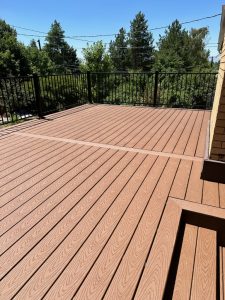
Trex? A hose, a soft brush, and a mild soap do most of the heavy lifting. No sealing. No staining. Spring cleanup after the last snow is usually it. You know what? That alone convinces a lot of busy families.
For both materials, we recommend keeping leaves and snow from piling up, and using gentle ice melt around posts and rails. Good deck hygiene works wonders.
Aesthetics: grain, color, and the “that looks real” test
Traditional wood decking brings grain, movement, and a scent that’s hard to fake. If you’re a purist, cedar and redwood have timeless charm. You’ll see small knots, slight color shifts, and those natural, lived-in vibes.
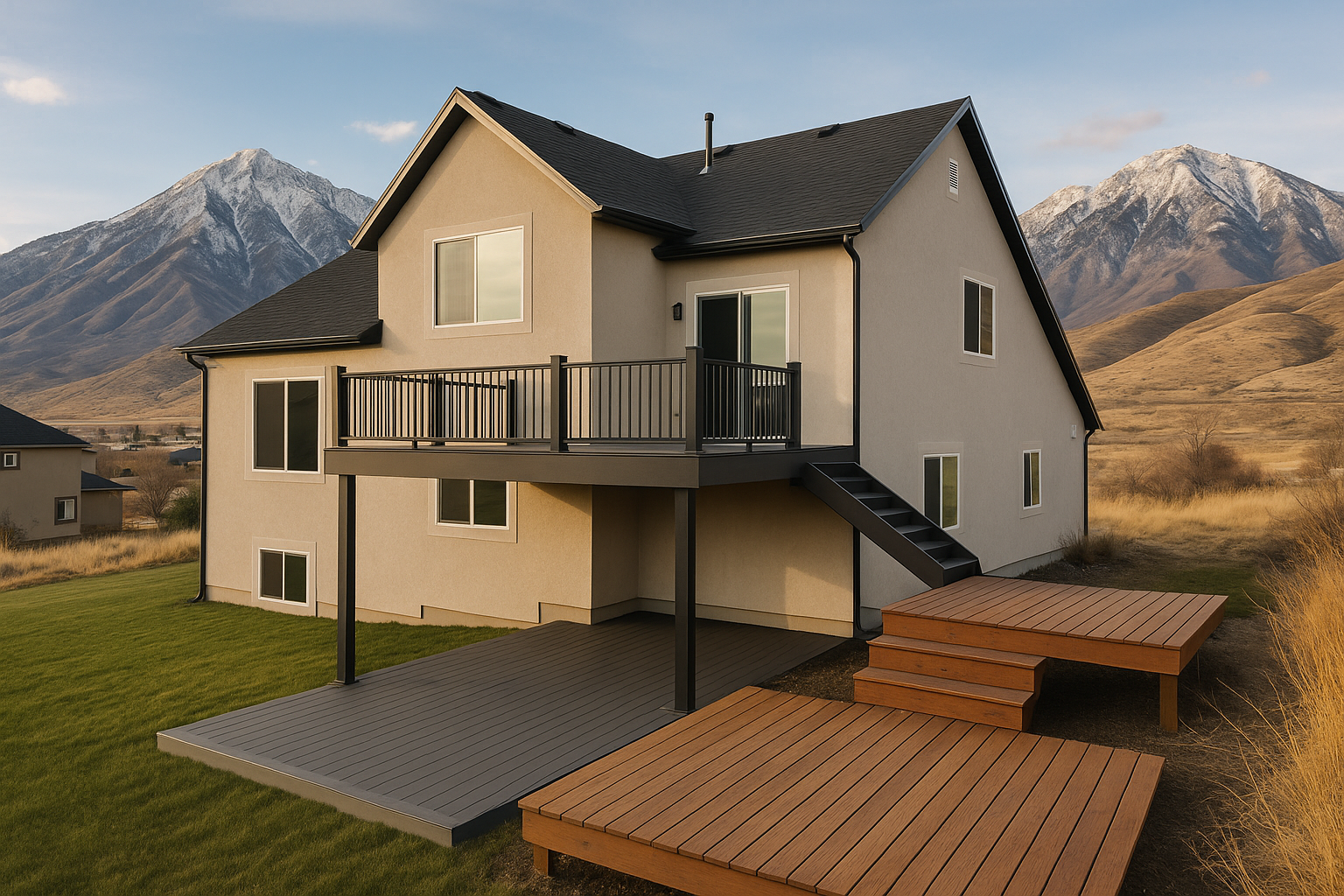
Modern Trex composite decking has raised its game. Boards like Trex Transcend provide deep grain embossing, multi-tonal color, and picture-frame looks that feel tailored. It’s consistent without seeming flat, and it pairs nicely with black powder-coated railing for a clean, mountain-modern style that’s big across the Wasatch Front.
We often lay a few sample boards in your yard at different times of day—morning shade, afternoon sun—so you can see the real story before you commit.
Comfort and safety underfoot
Splinters? Wood can produce them as it dries, especially after a few summers. Composite won’t. Traction? Both can be safe, but we like board lines with stronger grip textures at stairs and landings. We also set joist spacing and board direction to push water away and cut down on slick spots.
Heat is worth a note. Darker surfaces, wood or composite, get warmer. Composite can feel hotter in direct high-altitude sun; lighter Colors help, as do pergolas, umbrellas, and a touch of shade from smart landscaping. We’ll talk color and shade early if barefoot comfort is a must.
Weather in the Wasatch: what it does to decks
Salt Lake City throws a little of everything at a deck. UV is intense at elevation; winters bring freeze–thaw cycles; and spring can bounce from warm to wet in one week.
Trex boards are capped to fight fading and staining, and they handle moisture well when installed with the right gaps and airflow. Wood can still shine here, but it needs diligent sealing and a steady schedule. If you skip a cycle or two, small checks and cups can show up, and snowmelt can creep into exposed end grain. We use end cuts, joist tape, and careful flashing—Trex Protect or G-Tape on framing—to give either material a longer, happier life.
The environmental angle
Trex makes boards using recycled plastic film and reclaimed wood fiber, keeping tons of material out of landfills. That’s a meaningful win. With wood, responsible sourcing matters; FSC-certified cedar or redwood can be a thoughtful choice. Pressure-treated lumber delivers value, but it’s chemically treated, so disposal and cutting practices should be handled with care.
Bottom line: Both paths can be eco-aware with the right choices. We’ll walk through options so your deck’s story matches your values.
Installation details Utah homeowners care about
Decks look simple. They’re not. Framing and connections matter more than the surface itself, especially under snow loads and wind gusts coming off the canyon.
- Structure: Proper footings, beams, and hardware sized for local loads.
- Joist spacing: Composite often wants tighter spacing; we follow manufacturer specs to avoid bounce.
- Fasteners: Hidden systems like Trex Hideaway create clean lines and help spacing; stainless hardware resists corrosion.
- Moisture management: Joist tape, proper flashing at the ledger, and solid drainage keep frames dry.
- Extras: Blocking under grills, hot tubs, or planters; conduit for lighting; and a smart plan for snow shoveling routes.
We build to code, then we build for the way you’ll live on it—two slightly different things that should meet in the middle.
Common questions we hear in Salt Lake City
We get these a lot, so here are quick, straight answers.
- Will Trex fade? Modern capped boards resist fading and staining. Expect slight mellowing, then stability.
- Can I stain wood every few years and be fine? Yes—if you stay on schedule and prep well. Skipped cycles show fast in our sun.
- Is composite slippery in winter? Textured boards do well; keep snow cleared and use a plastic shovel to protect the surface.
- What about grill grease? Composite cleans with mild soap. For wood, use a heavier-duty cleaner and re-seal as needed.
- Do I need permits? Most new decks or structural changes do. We handle drawings, permits, and inspections for you.
Which deck fits your lifestyle?
If you love the romance of wood, enjoy projects, and don’t mind a brush and a Saturday each spring, traditional wood decking may be your happy place. It’s warm, classic, and it ages with character if you care for it.
If your calendar’s already full and you want a clean, modern look that stays predictable, Trex composite decking is hard to beat. Low upkeep, excellent durability, and it pairs beautifully with contemporary railings, lighting, and outdoor kitchens.
And yes—some families do a blend. Wood pergola, composite deck. Or composite main deck with a wood accent bench. Your yard, your rules.
Local tips for color, shade, and snow
A few Salt Lake–specific notes from our crews:
- Color choice matters: Lighter boards run cooler in August. Mid-tones hide dust and pollen better in spring winds.
- Plan shade: A pergola or sail can make a south-facing deck feel great all day.
- Snow strategy: Use a plastic shovel, clear drifts at rail posts, and leave small melt channels along picture-frame edges.
Small habits add years. It’s not fussy—it’s smart.
Let Utah Deck Company help you choose with confidence
We design and build decks across the valley, from Foothill to Daybreak to the benches. We’ll bring samples, talk through budgets, and map out maintenance so you know exactly what you’re signing up for—no surprises, no guesswork. Whether you land on Trex decking or traditional wood decking, we’ll build it right and make it feel like home.
Ready to take the next step with a trusted deck builder in Salt Lake City? Call us at 801-921-6826 or tap to call now. Want everything in writing first? Request a Free Quote and we’ll schedule a friendly, no-pressure visit.